…Says institutions, not projects, will secure Lagos healthcare future
By Kingsley Samuel
Lagos State Governor, Babajide Sanwo-Olu, on Thursday unveiled a new phase of healthcare reforms aimed at achieving universal health coverage, with mandatory health insurance, digital medical records, improved infrastructure and stronger health institutions taking centre stage.
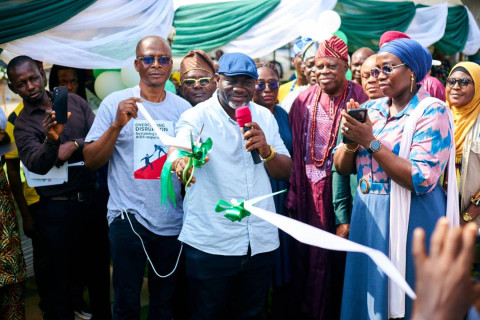
Speaking at the opening of the second edition of the Eko Health Convention 2026 in Lagos, Sanwo-Olu said his administration had shifted from executing healthcare projects to building sustainable institutions capable of delivering quality, affordable and accessible healthcare beyond the lifespan of any government.
The governor said the theme of the convention, “Building a Healthier Lagos: Connecting Access with Excellence,” reflects the state’s commitment to ensuring that every resident has access to quality healthcare regardless of income or location.
According to him, mandatory health insurance remains the foundation of universal health coverage in Lagos, noting that over 1.5 million residents have already enrolled in the Lagos State Health Insurance Scheme following the domestication of the National Health Insurance Authority Act.
He said initiatives such as the Ilera Eko EasyPay platform, which allows residents to pay insurance premiums in instalments, the Equity Fund for vulnerable groups and the LASHMA Assistance in Distress programme are expanding access to healthcare across the state.
“Projects belong to an administration; institutions become a legacy,” Sanwo-Olu said, adding that the reforms are designed to build a healthcare system that will endure for generations.
The governor also highlighted ongoing investments in healthcare infrastructure, including the completion of the Massey Children’s Specialist Hospital, the Lagos Mental Health Institute and additional general hospitals, alongside the expansion of maternal and child centres and climate-smart primary healthcare facilities.
On digital transformation, he announced that the Smart Health Information Platform (SHIP) would integrate patient records across primary healthcare centres, general hospitals and teaching hospitals.
According to him, electronic medical records, artificial intelligence and data analytics will improve diagnosis, disease surveillance, emergency response and policy formulation, while technology will complement, rather than replace, healthcare professionals.
Sanwo-Olu also acknowledged the shortage of health workers, saying government has intensified recruitment, improved welfare packages and approved the establishment of a University of Medicine and Health Sciences to increase the production of healthcare professionals.
He called on the private sector and development partners to deepen collaboration with government, stressing that public funding alone cannot meet the healthcare demands of Africa’s largest city.
Earlier, Deputy Governor, Dr. Kadri Obafemi Hamzat, said Lagos has become more resilient after seven years of reforms under the present administration.
He noted that investments in infrastructure, governance and mandatory health insurance have strengthened healthcare delivery and positioned the state for sustainable universal health coverage.
Hamzat commended doctors, nurses, pharmacists and other healthcare workers for their dedication, especially during the COVID-19 pandemic, describing them as the backbone of the health sector.
Also speaking, Commissioner for Health, Prof. Akin Abayomi, said the Eko Health Convention provides an opportunity to review progress under the Lagos State Health Sector Strategic Master Plan.
He disclosed that major projects, including the Massey Children’s Specialist Hospital, the Mental Health Institute, Ojo General Hospital and the proposed Lagos State University of Medicine and Health Sciences, are expected to strengthen healthcare delivery while attracting medical professionals from the diaspora.
Special Adviser to the Governor on Health, Dr. Kemi Ogunyemi, said the state has recorded significant progress in strengthening primary healthcare, emergency preparedness, workforce development and disease surveillance, adding that digital innovation would only succeed with a motivated healthcare workforce.
Chairman of the Lagos State House of Assembly Committee on Health, Musbau Aina-Lawal, pledged continued legislative support for health sector reforms, while President of the Healthcare Federation of Nigeria, Dr. Njide Ndili, reaffirmed the private sector’s commitment to supporting Lagos in achieving universal health coverage.
Mental health advocate and founder of Genevieve Magazine, Betty Irabor, urged Nigerians to pay greater attention to their physical and mental wellbeing, saying preventive healthcare remains critical to healthy living.
The convention continues with technical sessions on healthcare financing, digital transformation, patient safety, innovation and strategic partnerships aimed at accelerating universal health coverage in Lagos.