By Kingsley Samuel
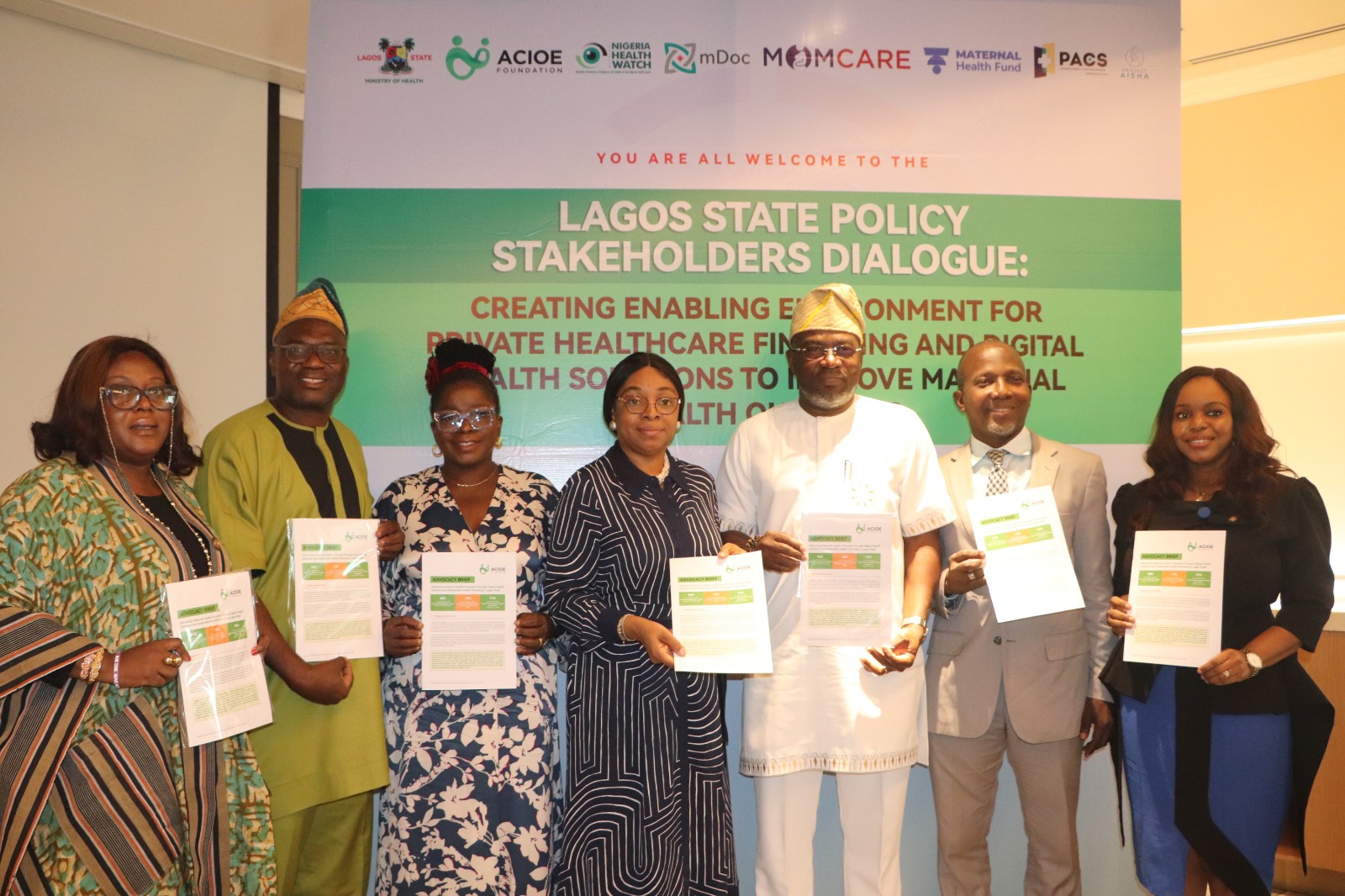
The Lagos State Ministry of Health, in partnership with the ACIOE Foundation, has convened a high-level policy dialogue to explore innovative financing models and digital health solutions aimed at improving maternal health outcomes in the state.
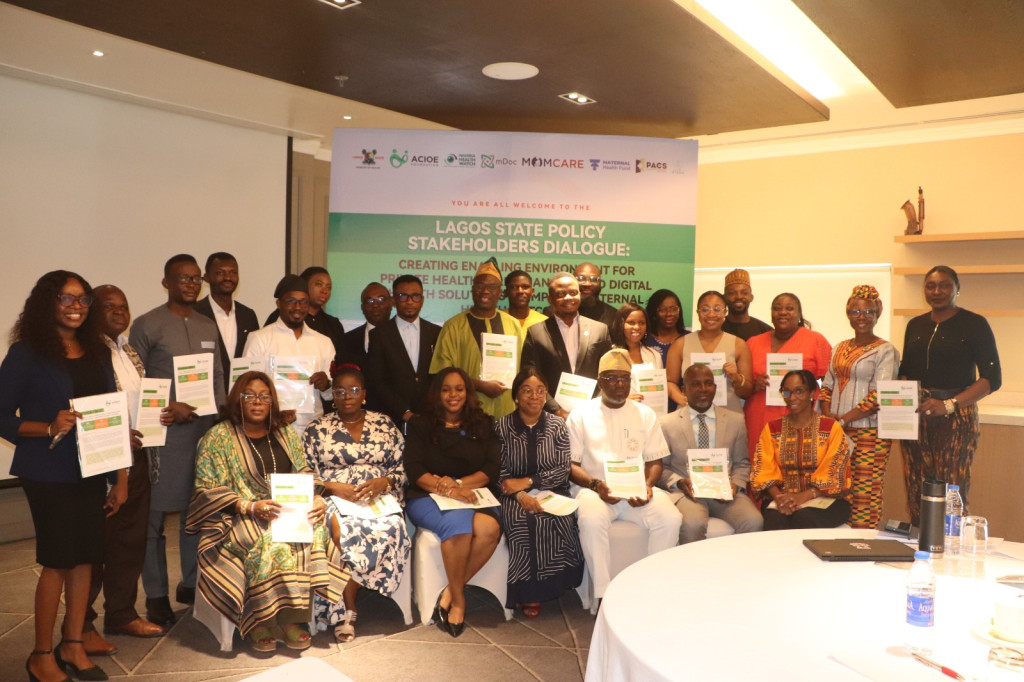
The meeting, held at the Marriott Hotel Ikeja in Lagos, brought together policymakers, private healthcare providers, financial institutions, development partners and health sector stakeholders to examine strategies for strengthening private healthcare financing and scaling digital innovations in maternal health service delivery.
The dialogue also reviewed progress under the Maternal Health Advocacy and Communication (MHAC) Project while exploring practical approaches to expanding healthcare financing and improving maternal care access across Lagos.
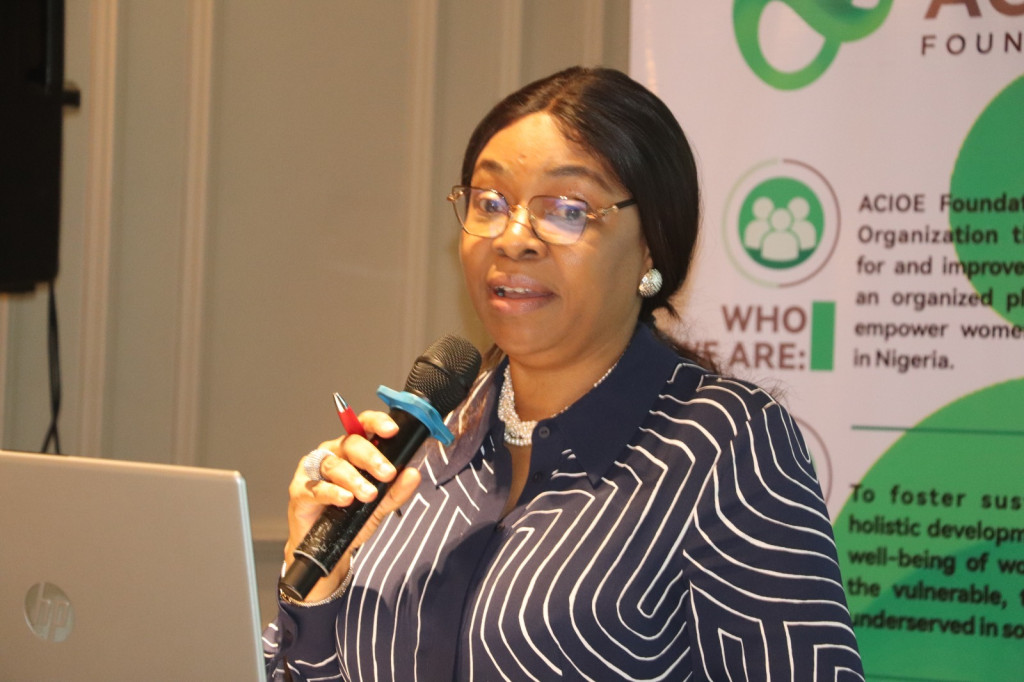
Opening the session, Permanent Secretary of the Lagos State Ministry of Health, Dayo Lajide, described maternal health as a top priority for the state government. She noted that despite progress in skilled birth attendance and emergency obstetric care, significant gaps remain in equitable access, quality of care and sustainable healthcare financing.
According to her, Lagos, as a megacity with a large private healthcare presence, must strategically integrate private providers into efforts to reduce preventable maternal deaths.
“Strengthening regulatory frameworks and promoting innovative financing models will be critical to achieving universal health coverage and improving maternal health outcomes,” she said.
Lajide highlighted several ongoing initiatives supported by partners, including the Digital Mom Project powered by mDoc Complete Health, which provides AI-enabled digital maternal care services from preconception through postpartum stages. The initiative aligns with the state’s Self-Care Guidelines launched in 2024.
She also cited the FORMOM Project and the SFH IntegratE PACs initiative, which have helped strengthen the financial capacity of private healthcare providers.
Additionally, the deployment of the Helium Health Electronic Medical Records platform across 113 private health facilities in Lagos has improved patient data management, record keeping and service efficiency.
In his goodwill message, Chief Executive Officer of ACIOE Foundation, Innocent Isichie, emphasised the importance of collaboration in strengthening health systems and improving maternal and child health outcomes.
Isichie disclosed that partners under the MHAC project conducted a rapid assessment of private healthcare providers, financing opportunities and the role of technology in the health system. He said the findings would guide strategies for expanding financing options and strengthening service delivery.
Also speaking, Country Director of MSD for Mothers, Iyaduni Olubode, noted that several collaborative health initiatives have been implemented in Lagos since 2018, particularly in maternal and reproductive health.
She highlighted programmes that have improved access to family planning services through community pharmacies and drug shops, describing Lagos as a model for effective health sector collaboration.
“Lagos has demonstrated how strong partnerships and innovation can sustain maternal health interventions and create models that other states can learn from,” she said.
Senior Programme Lead at the Nigeria Health Watch Financial Health Institute, Onyedikachi Ewe, said maternal health remains a critical indicator of the strength of a country’s health system and its overall development.
She added that strategic advocacy and health communication play a key role in mobilising stakeholders, shaping policy decisions and promoting evidence-based interventions to reduce preventable maternal deaths.
Chairman of the Association of Nigerian Private Medical Practitioners in Lagos State, Esegine Jonathan, stressed the important role private healthcare providers play in delivering services, particularly in underserved communities.
However, he noted that limited access to financing remains a major challenge for many private practitioners, especially smaller community-based facilities.
He therefore urged financial institutions and government agencies to develop inclusive financing mechanisms that would enable private healthcare providers to expand services and improve infrastructure.
Director of the Pharmacy Council of Nigeria Lagos Zonal Office, Taiwo Filusi, also highlighted the need to strengthen healthcare financing and accelerate the integration of digital, data-driven solutions to improve maternal and newborn health outcomes.
Filusi emphasised that collaboration among government agencies, private providers, financial institutions and development partners will be essential to developing sustainable financing structures that expand access to quality healthcare.
Participants at the dialogue further examined Lagos State’s ongoing healthcare financing initiatives and digital health interventions that private sector operators can leverage to enhance service delivery.
The meeting also created a platform for engagement between financial institutions and private healthcare providers to explore financing mechanisms that could support facility expansion, infrastructure development and improved service capacity.
Stakeholders agreed that strengthening public–private partnerships, expanding health insurance coverage and scaling digital health solutions will be critical steps toward reducing maternal and newborn mortality in Lagos State.