By Kingsley Samuel
Lagos State Government has unveiled plans to use digital health, artificial intelligence, data and strategic partnerships to transform healthcare delivery, improve health outcomes and position the state as a hub for medical innovation and the emerging bioeconomy in Africa.
The state said the strategy would address challenges associated with fragmented health records, rising population, pressure on healthcare facilities, workforce shortages and the need for more sustainable health financing.
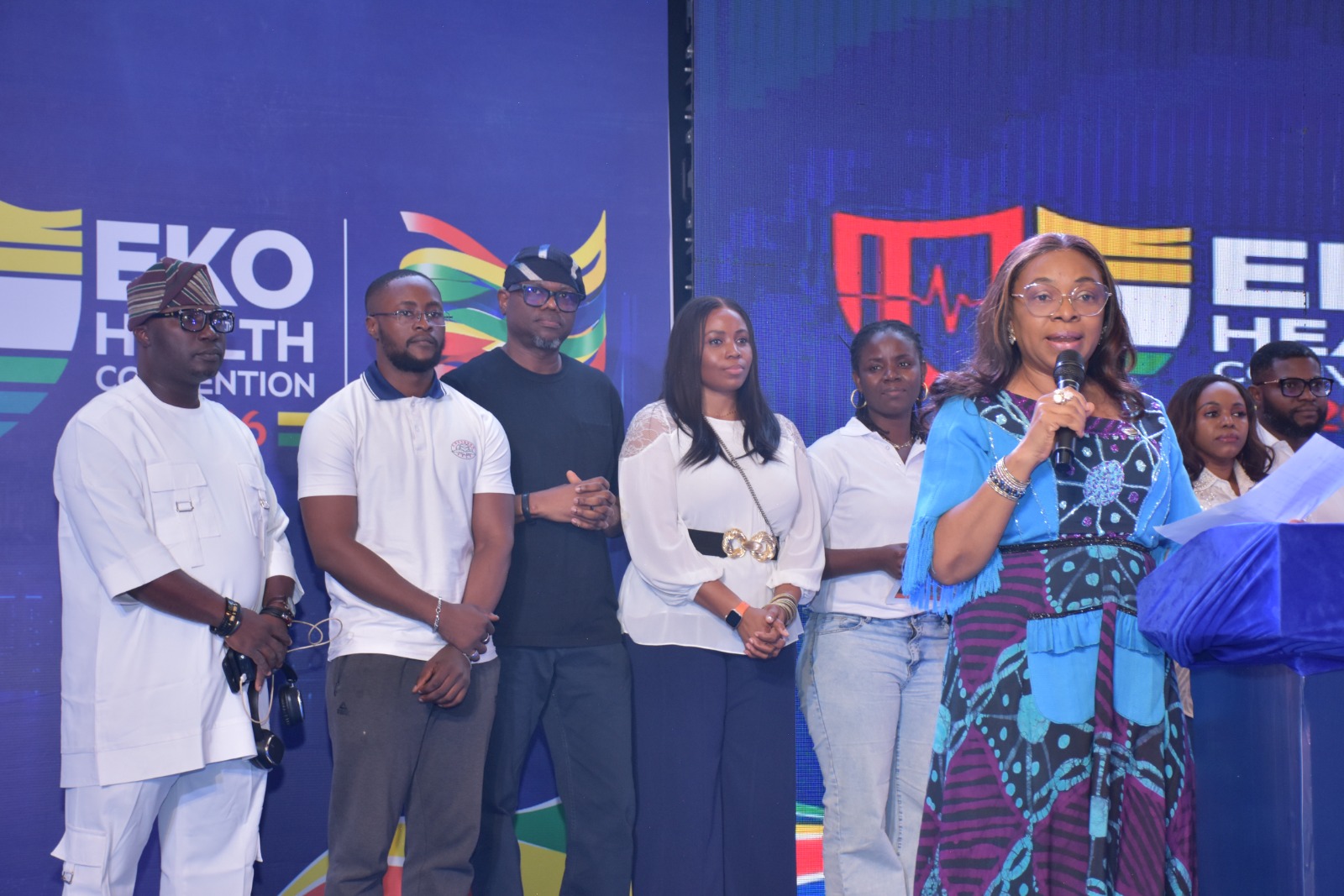
The vision was unveiled on Friday at the second day of the Eko Health Convention 2026, held at Oriental Hotel, Lagos, where health leaders, technology experts, development partners and innovators examined how digital technologies and partnerships could strengthen the state’s health system.
Speaking at the event, Commissioner for Health, Prof. Akin Abayomi, said digital health had moved beyond electronic medical records and applications, stressing that the real value of digitalisation was in generating quality data that could drive research, precision medicine, innovation and economic growth.
According to him, the Lagos Smart Health Information Platform, SHIP, would provide the foundation for connecting patient records, investigations, biological information and other health data, enabling the state to build population intelligence and deploy artificial intelligence and machine learning for scientific discovery.
“Data has become king,” Abayomi said, describing digital health infrastructure as increasingly important to the economy, just like roads, electricity, telecommunications and financial infrastructure.
He said Lagos’ digital health strategy was also linked to the development of a bioeconomy driven by biotechnology, pharmaceuticals, genomics, artificial intelligence and biosciences.
Abayomi explained that the state was developing infrastructure and human capital to move healthcare from a predominantly treatment-based model towards prevention, precision medicine, regenerative medicine and healthy longevity.
He identified the proposed University of Medicine and Health Sciences, Lagos State Medical, Industrial and Innovation Zone, LASMIIZO, in the Lekki Free Trade Zone, SHIP and the Lagos BioShield initiative as some of the projects supporting the vision.
He said LASMIIZO would bring together medical manufacturing, research and development and healthcare innovation, while the BioShield initiative would strengthen Lagos’ preparedness against future infectious disease threats.
“For Lagos, we do not want to be left behind. We want to participate in the advancement of science and embrace digital technologies,” he said.
Digital transformation must serve people
Opening the second day of the convention, Special Adviser to the Governor on Health, Dr. Kemi Ogunyemi, said Lagos’ growing population was placing increasing pressure on hospitals, primary healthcare centres and emergency services, making digital transformation imperative.
She recalled that the Ebola outbreak and COVID-19 pandemic exposed the risks associated with disconnected health information, as patients could move from one facility to another without their medical histories following them.
Ogunyemi, however, cautioned that technology must not become the centre of healthcare transformation.
She said digital transformation must ultimately be about improving the experience and outcomes of Lagos residents.
“Digital transformation must put Lagosians, not technology, at the centre of healthcare,” she said.
According to her, SHIP would help the state move from isolated facility-based records to a centralised health information repository capable of supporting trend analysis, artificial intelligence, disease surveillance and better resource allocation.
She added that digital platforms, including e-pharmacies, were already helping to expand access to essential medicines, family planning services and counselling.
Ogunyemi identified four priorities for the next phase of Lagos’ health reforms: completion of flagship projects; deeper digital transformation through artificial intelligence and surveillance; universal health coverage; and investment in people and strategic partnerships.
“Government cannot do it alone,” she said, calling for stronger collaboration among the private sector, technology innovators, healthcare professionals, communities and development partners.
Interoperability critical
Permanent Secretary, Lagos State Ministry of Innovation, Science and Technology, Mr. Adeyinka Shorungbe, said seamless information exchange was critical to building an effective healthcare system.
He said Lagos needed to connect primary, secondary, tertiary and private healthcare facilities so patients could access their medical information regardless of where they sought care.
“Information exchange is at the heart of an effective healthcare system,” Shorungbe said.
He urged healthcare professionals to become more involved in technology development by identifying challenges within the health system and working with innovators to develop practical solutions.
Shorungbe commended the Lagos Digital Health Innovation Challenge and encouraged innovators to explore funding opportunities through the Lagos State Science, Research and Innovation Council, LASRIC.
He also stressed the need for capacity building, cybersecurity, data governance and sustainable partnerships to ensure that digital transformation was secure and beneficial to citizens.
Chief Executive Officer, Mobihealth International, Dr. Funmi Adewara, described the future of healthcare as “click-and-brick”, combining digital access with physical healthcare facilities.
She said telemedicine had demonstrated its usefulness in Lagos through community, campus and primary healthcare-based telehealth facilities but urged the government to move beyond pilot projects.
Adewara called for reimbursement pathways under Ilera Eko, interoperability with SHIP, improved connectivity and workforce training.
Similarly, Health Informatics Director, PHIS3 Project, APIN Public Health Initiatives, Mr. Gibril Gomez, said digital health could multiply the value generated from every patient encounter.
“Healthcare begins with one patient, while digital health multiplies the value of every encounter,” Gomez said.
He explained that secure sharing of health information could transform individual clinical records into public health intelligence for disease surveillance, planning and decision-making.
AI needs safeguards
Founder, Africa Hub for Innovation and Development, Dr. Kunle Kakanfo, said artificial intelligence could improve clinical productivity and help address Nigeria’s shortage of healthcare professionals.
He, however, warned against uncontrolled deployment of AI in healthcare, saying the technology must be subjected to rigorous governance and validation.
Kakanfo called for institutional AI governance committees, clear accountability mechanisms and safeguards against algorithmic bias, liability and inaccurate outcomes.
He described unregulated use of AI in healthcare as “shadow clinical AI.”
Lagos seeks sustainable health financing
On sustaining health programmes beyond donor support, Chief Executive Officer, Lagos State AIDS Control Agency, Dr. Folakemi Basirat Animashaun, said the state had strengthened domestic ownership of the HIV response following disruptions in international HIV financing from 2025.
She said Lagos increased efforts in commodity procurement, treatment continuity, prevention, community engagement and evidence-based resource mobilisation.
“The crisis became an opportunity,” Animashaun said, stressing that the funding shock had provided an opportunity to build a more resilient health system.
Managing Director, Digital Health Platforms Limited, Mr. Femi Olapegba, said SHIP was designed to tackle fragmentation arising from multiple electronic medical records, laboratory systems, telemedicine platforms and paper-based records operating independently.
He said the platform, built around the HL7 FHIR interoperability standard, would connect hospitals, laboratories, primary healthcare centres, pharmacies, HMOs, regulators and patients.
According to him, the system would provide a unified longitudinal health record and real-time intelligence for government.
Olapegba said SHIP would support patient identification through the SHIP Care Number, summary care records, electronic referrals, e-prescriptions, emergency access to critical patient information and financial dashboards.
He added that the platform was being extended to agencies including the Lagos State Blood Transfusion Service, HEFAMAA and the Lagos State Traditional Medicine Board to capture the healthcare-seeking journey of residents.
Stakeholders seek stronger partnerships
At a panel session on building sustainable partnerships beyond donor grants, stakeholders said long-term health gains would require stronger government ownership, community participation and co-financing.
Dr. Temitope Balogun-Alo of the Lagos State Primary Health Care Board said the state had established 81 round-the-clock primary healthcare centres through investments in infrastructure, recruitment of more than 900 healthcare workers and adoption of a hub-and-spoke model.
She said further expansion would require additional staffing, security, ambulance services and sustained investment.
Other panellists, including Dr. Chizoba Fashanu of CHAI, Ibeju-Lekki Local Government Chairman, Hon. Abdullahi Sesan Olowa, Dr. Olaposi Olatoregun of APIN and Dr. Ibrahim Dalhatu of the US CDC, called for stronger local ownership, disability inclusion, improved surveillance, community engagement, sustainable health financing and greater use of data.
The moderator, Dr. Noimot Abisola Balogun, said sustainable partnerships must translate into practical implementation, stressing that quality healthcare should be treated as a right rather than a privilege.
Eko Health Convention 2027 announced
Permanent Secretary, Lagos State Ministry of Health, Dr. Dayo Lajide, commended Governor Babajide Sanwo-Olu, Deputy Governor Dr. Kadri Obafemi Hamzat, First Lady Dr. Claudiana Ibijoke Sanwo-Olu, the health leadership, agencies, development partners, sponsors, exhibitors, innovators and the media for supporting the two-day convention.
Lajide described the event as a collective effort and acknowledged the role of Special Adviser on Health, Dr. Ogunyemi, in driving and coordinating the convention.
She also commended the health workforce, partners and media for contributing to the visibility of the event, announcing that the next edition would be Eko Health Convention 2027.
Reflecting on the convention, Executive Secretary, Lagos State Blood Transfusion Service, Dr. Bodunrin Osikomaiya, said Eko Health Convention 2026 had moved the conversation from innovation to integration, with digital health and partnerships emerging as key pillars of Lagos’ next phase of healthcare transformation.
She said the gains of the 2025 edition had evolved into a clearer agenda for 2027.
“EHC 2026 may be ending, but EHC 2027 begins tomorrow,” Osikomaiya said.
She called for improved interoperability, stronger referral pathways, institutionalisation of successful innovations, measurable accountability and greater attention to the experiences of citizens.
The event ended with stakeholders emphasising that Lagos’ digital health ambition would depend not merely on acquiring technology but on connecting systems, strengthening institutions, investing in people, protecting health data and ensuring that innovation translates into accessible and quality healthcare for residents.