By Juliet Umeh
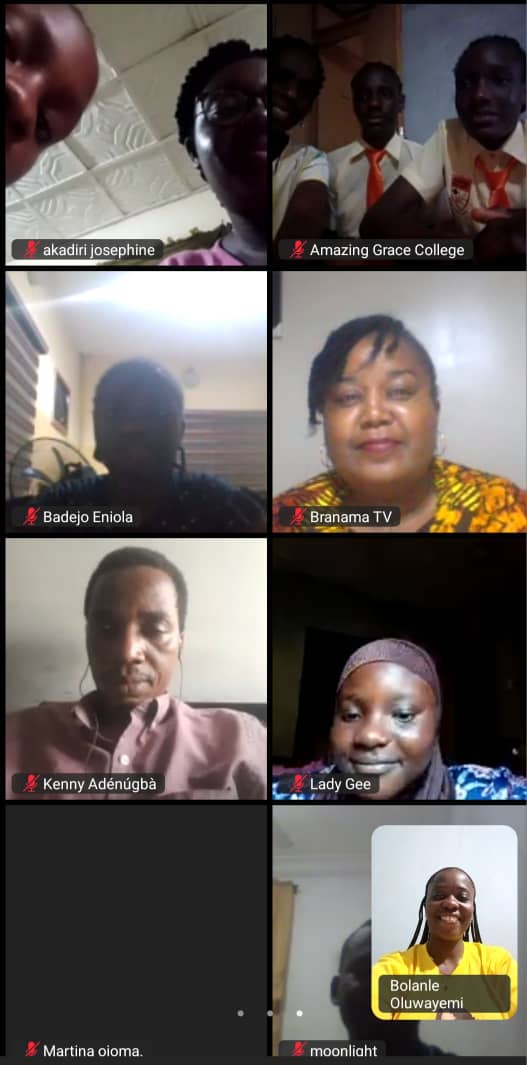
In celebration of the International Day of the Girl Child, the Sanitary Pad Media Campaign, SPMC, hosted a virtual Public Speaking Webinar for the top 30 finalists of its My Period Stories Essay Competition. The event, themed “The Girl I Am, The Change I Make: Girls on the Frontline of Crisis,” inspired girls to find their voices, share their experiences, and lead social change through storytelling.
Welcoming participants, Anikeade Funke-Treasure, Convener of SPMC, noted that the initiative was designed to equip young girls with confidence and communication skills while promoting menstrual health awareness.
“We believe this program will empower these young girls to become better versions of themselves and positive influencers in society. Through mentorship, we are nurturing future icons,” Funke-Treasure said.
The event featured distinguished speakers and mentors including Oriyomi Pamela Sosu Otuka, Curator of the National Museum of Unity, Ibadan; Betty Dibiah Akeredolu-Ale, CEO of BRANAMA TV; and Sophie Enitan Oluwa, Esq., Executive Director of NATINEEE. Together, they guided participants on the art of public speaking, leadership, and advocacy — planting what they described as “seeds of meaningful impact.”
Among the essay winners were Abasiekeme Eshiet, a Law student at the University of Uyo, who was mentored by Sophie Enitan Oluwa; Klistivitonyon Ogunlana, paired with Betty Dibiah Akeredolu-Ale; and Temitope Akinyinka, who worked with Pamela Oriyomi Otuka. The mentees expressed heartfelt appreciation for the mentorship and the platform SPMC provided to amplify their voices.
A highlight of the webinar was a moving poetic performance titled “Menstrual Flow” by Victory Alleson, which received enthusiastic applause from participants and mentors alike.
Throughout the session, speakers emphasized the need for inclusive menstrual health advocacy and stronger national policies that guarantee free access to reproductive health education. Oluwa encouraged the girls to be advocates for others, especially those in underserved communities and internally displaced persons (IDP) camps.
“Menstruation is not a source of shame. Girls and women continue to achieve greatness in every sphere — despite all odds,” she affirmed.
Akeredolu-Ale further urged inclusivity, emphasizing the need to support girls with disabilities and those from low-income backgrounds.
“Girls should know they can be anything they aspire to be. They must never be afraid to dream big,” she said.
Participants, including Temiloluwa Ajala, shared testimonials describing the program as life-changing, noting that it enhanced their confidence, self-expression, and understanding of menstrual health advocacy.
Closing the event, Pamela Otuka called for greater investment in girls’ education, health, and participation in decision-making. She also underscored the importance of involving boys and men in menstrual health conversations to foster empathy and understanding.
The Public Speaking Webinar is one of several impactful initiatives by SPMC aimed at empowering young girls, promoting menstrual health education, and driving gender equity through mentorship and media advocacy.