By Kingsley Samuel
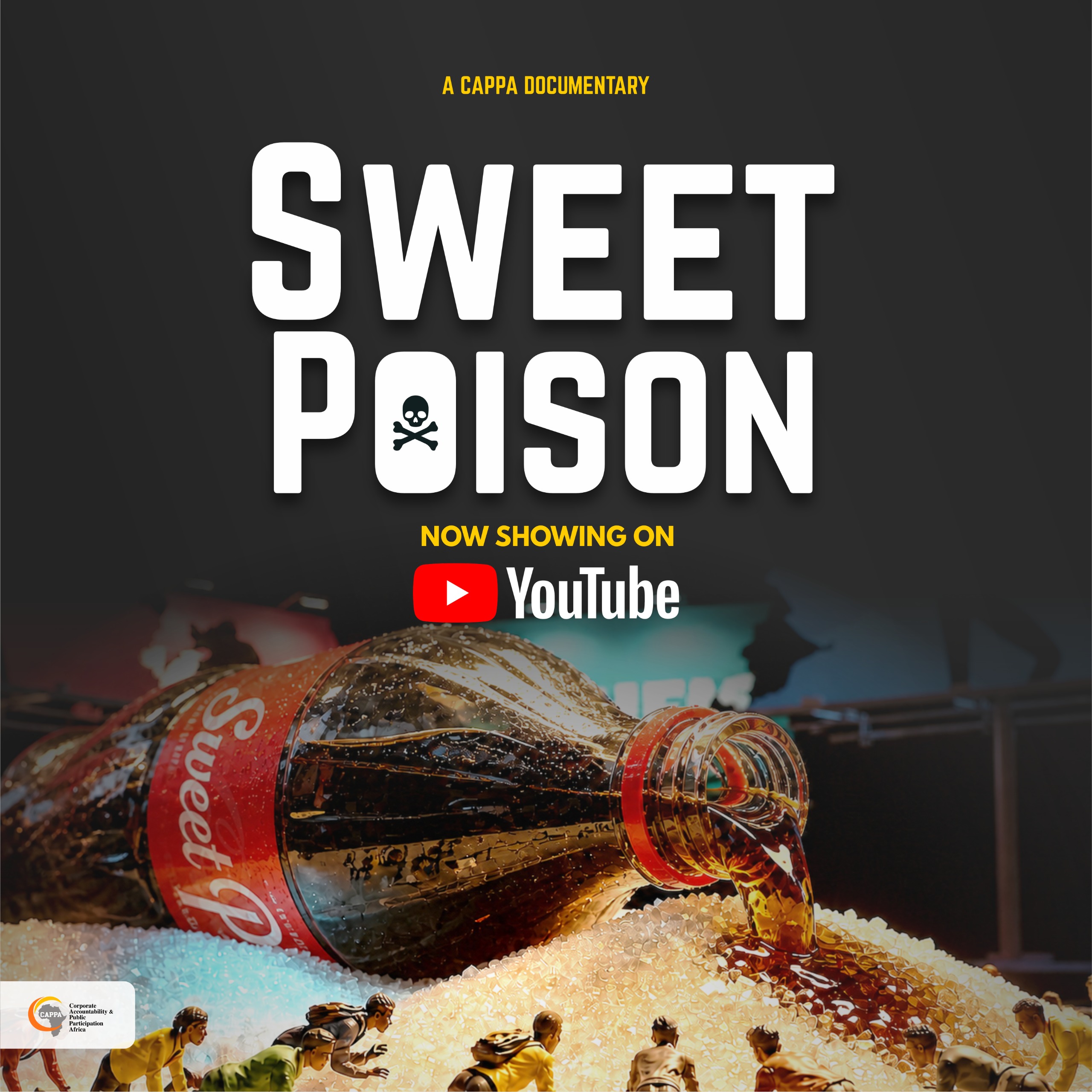
A new documentary, Sweet Poison, has raised fresh concerns over the growing consumption of sugar-sweetened beverages in Nigeria, linking the trend to the increasing burden of non-communicable diseases, NCDs, and environmental pollution across the country.
The documentary, produced by Corporate Accountability and Public Participation Africa, CAPPA, examines how aggressive marketing by ultra-processed food and beverage companies has embedded sugary drinks into everyday Nigerian life, with significant implications for public health.
Premiered in Lagos, the film combines expert analysis, medical evidence and personal testimonies from policymakers, health professionals, traders, students and Nigerians living with diet-related illnesses to highlight what advocates describe as a silent public health crisis.
Speaking at the premiere, Executive Director of CAPPA, Mr. Akinbode Oluwafemi, said the documentary seeks to connect the dots between rising consumption of sugary drinks and the growing incidence of diseases such as diabetes, hypertension, obesity and other non-communicable conditions.
He said: “Blending expert analysis with personal stories and striking visuals, the documentary features perspectives from policymakers, medical professionals, NCD patients, traders, fishermen and university students to examine the growing public health crisis linked to the excessive consumption of sugary drinks.
“Sweet Poison is an attempt to connect the dots. It combines medical evidence, lived experiences and on-the-ground realities to show how growing dependence on sugary drinks is quietly reshaping the nation’s health profile.”
According to CAPPA, the documentary exposes the extensive marketing strategies deployed by beverage companies, from billboards and public transport branding to advertisements around schools and communities, which continue to attract new consumers, especially young people.
Reviewing the documentary, veteran journalist and media scholar, Dr. Olayinka Oyegbile, described the film as a timely intervention that challenges Nigerians to rethink everyday consumption habits often taken for granted.
“What makes Sweet Poison compelling is that it does not preach. It simply lays out the evidence through medical experts, policymakers, traders, students and ordinary Nigerians living with non-communicable diseases linked to excessive sugar consumption,” he said.
According to him, many Nigerians often choose sugary drinks over healthier alternatives without considering the long-term health implications.
The documentary also explores the environmental impact of the beverage industry, drawing attention to the growing volume of discarded plastic bottles littering streets, blocking drainage channels and contributing to flooding in urban centres.
Beyond public health concerns, the film addresses arguments by industry players that stricter regulations and higher taxes on sugary drinks could threaten jobs and investments.
While acknowledging the sector’s economic contributions, the documentary argues that business growth should be balanced with public health responsibilities and environmental sustainability.
CAPPA noted that Sweet Poison aligns with its long-standing advocacy efforts on tobacco control, environmental justice and healthy food policies.
Produced with support from the Global Health Advocacy Incubator, GHAI, the documentary is available on YouTube and is being promoted as an educational tool for schools, universities and community groups.
Public health advocates say the film comes at a critical time as Nigeria continues to grapple with rising rates of diet-related illnesses and increasing healthcare costs associated with non-communicable diseases.