By Kingsley Samuel
Quidax, an African-founded digital assets exchange, says it is building infrastructure to help banks, asset managers and fintech companies offer stablecoins and other digital assets to their customers.
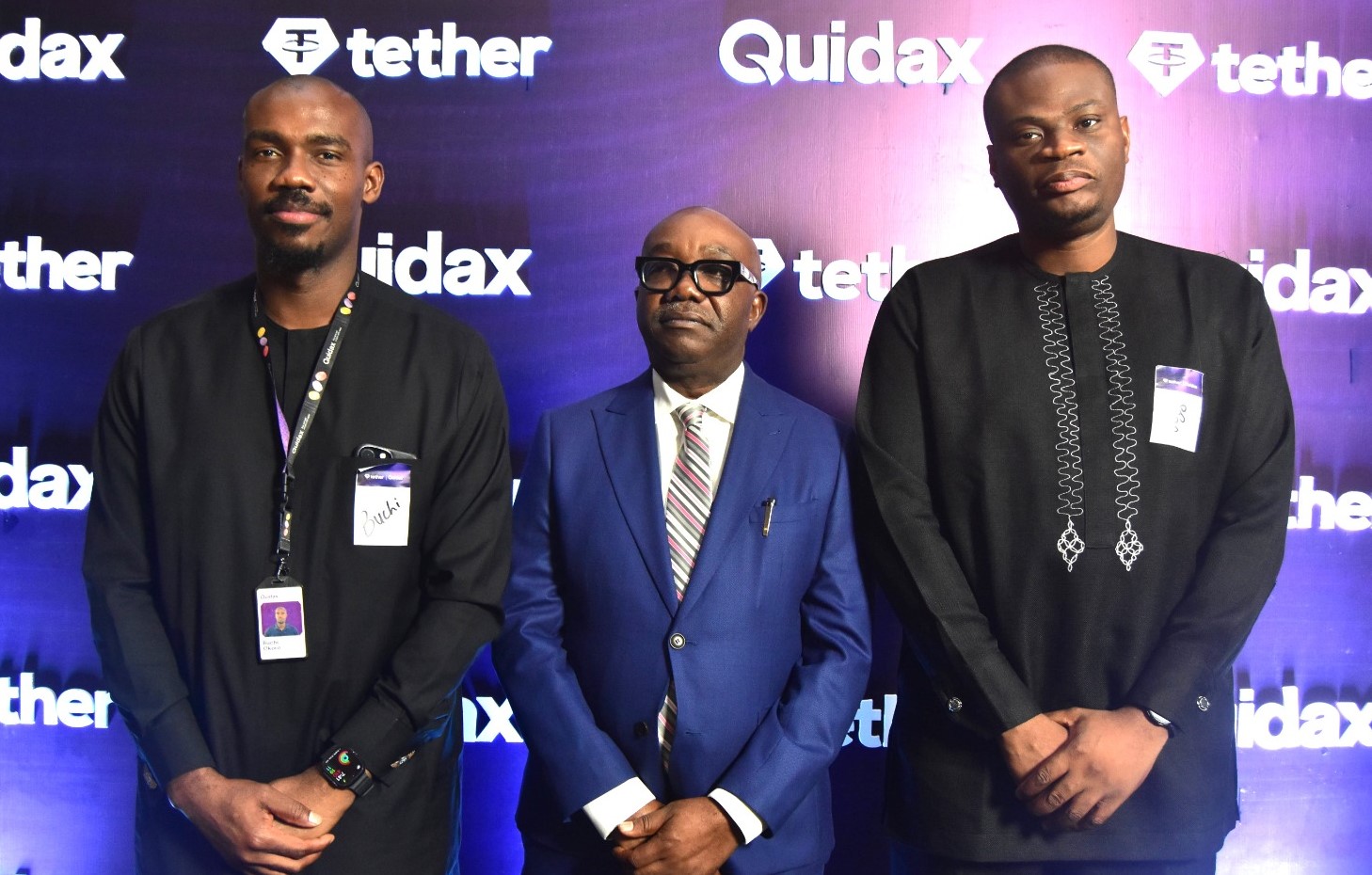
Co-Founder and Chief Executive Officer of Quidax, Buchi Okoro, said the company aims to support institutions seeking to enter the digital assets market by providing technology, market education and compliance standards.
Okoro spoke at The Exchange, an invitation-only event on stablecoins and digital assets hosted by Quidax in partnership with Tether, issuer of USDT, at the Lagos Continental Hotel. The event brought together regulators, industry leaders, fintech executives and legal and audit professionals.
“Over the next five years, our focus is on supporting the ecosystem around us. More and more institutions — banks, asset managers, fintechs and businesses across every sector — are considering how to bring stablecoins and digital assets to their own customers,” he said.
“We want to be the trusted partner that helps them on that journey: educating the market, holding ourselves to the highest professional and compliance standards, and building the infrastructure that lets them serve their customers today and well into the future.”
Quidax, which says it was the first digital assets exchange to receive a provisional licence from the Securities and Exchange Commission, said the approval reflected its effort to build a trusted framework for the sector.
Okoro said trust was central to the growth of digital finance, where customers could not rely on face-to-face interactions to assess a service provider.
“Trust is the new currency. In the physical world, people can walk into a branch, shake a hand and look someone in the eye. In the digital world, they cannot, so trust has to be earned in other ways: through regulation, transparency, and doing the right thing every single day,” he said.
“Digital trust is essential. If your customers, your partners and your regulators cannot trust your business, nothing else you build will matter.”
John Briggs, Head of the SEC’s Lagos Zonal Office, who represented the Commission’s Director-General, Dr Emomotimi Agama, said digital assets were already being used by Nigerians for cross-border payments and to manage currency risk.
Citing Chainalysis data, Briggs said Sub-Saharan Africa received more than $205 billion in on-chain value between July 2024 and June 2025, an increase of about 32 per cent year-on-year. Nigeria accounted for more than $92.1 billion, leading the region, he said.
He also cited the firm’s 2026 Global Crypto Adoption Index, which ranked Nigeria third globally overall and first for peer-to-peer activity and cross-border flows.
“These are not abstract statistics. They are Nigerians — traders, families, young entrepreneurs — using digital assets, and stablecoins in particular, to move value across borders and manage currency risk,” Briggs said.
“The question before us is not whether digital assets will shape the future of finance in Nigeria. They already do. The question is whether that future will be built on trust. The Commission is determined that it will.”