By Kingsley Samuel
Popular Nollywood actor, writer and producer, Richard Mofe-Damijo, popularly known as RMD, has called for greater inclusion of women in governance, saying women have consistently demonstrated the ability to deliver results when given leadership opportunities.
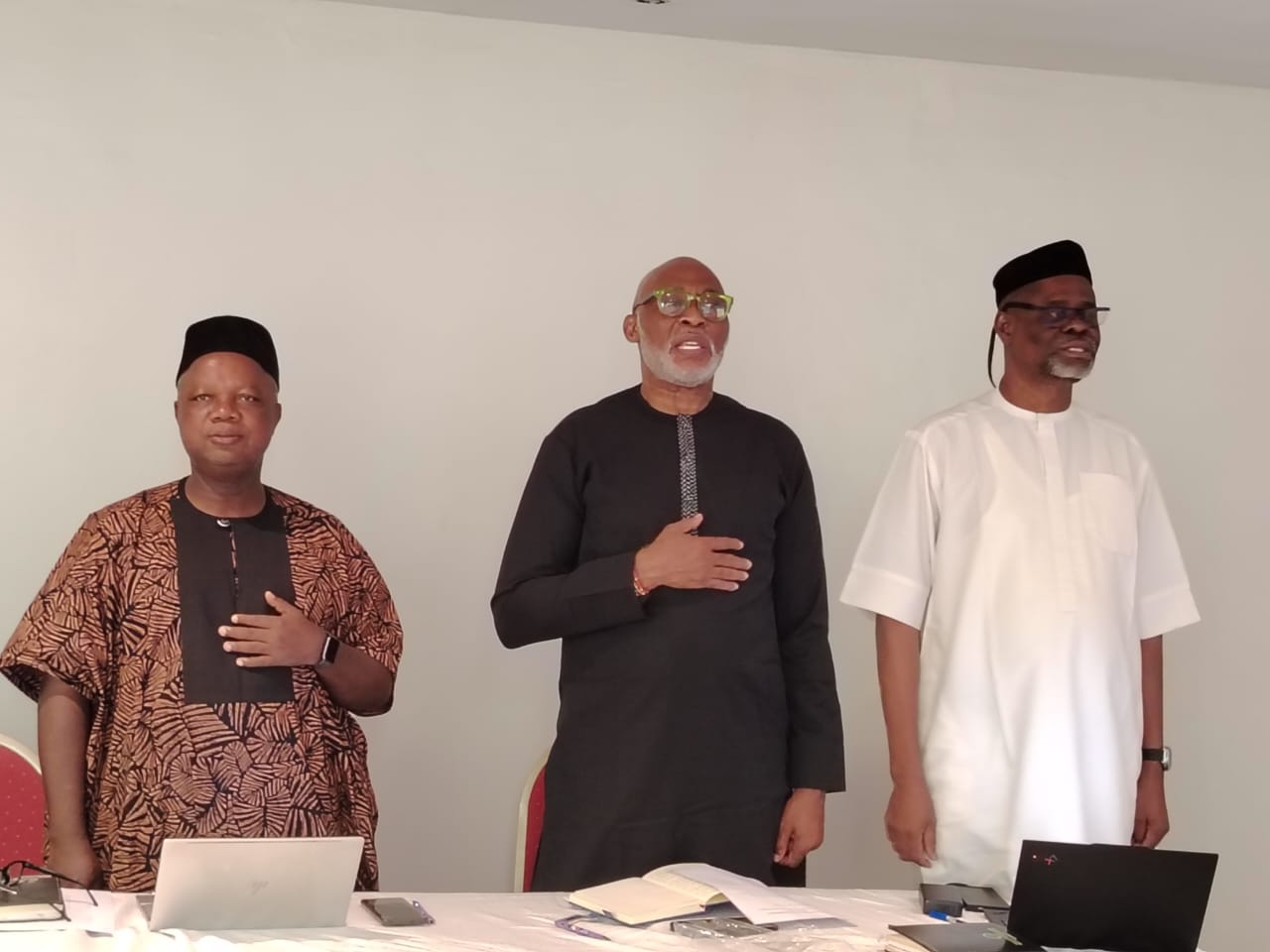
RMD made the call in Abuja after he was inaugurated as an ambassador of the Male Feminists Network, MFN, during the launch of the network’s Steering Committee by the African Centre for Leadership, Strategy and Development, Centre LSD.
The event also saw the inauguration of other ambassadors who will lead a nationwide campaign against gender-based violence, GBV, across Nigeria.
Speaking after his inauguration, RMD pledged the committee’s commitment to advancing the campaign against GBV and ensuring the network achieves its objectives.
According to him, women should be given more opportunities in leadership, particularly in government, because they have shown competence in delivering results.
He said: “When I produced a film two years ago, about 80 per cent of my crew were women. I always tell people that if you want things done in government, put a woman in charge and you can sleep with both eyes closed.”
He also urged men to treat women with dignity and respect, stressing that correcting a woman does not justify violence.”
Treat women the way you would treat your daughter or wife, with respect and dignity. Don’t objectify them or perpetrate violence against them. It is easier to talk to people than to use your fists,” he said.
RMD maintained that ending violence against women requires the active involvement of men, noting that gender-based violence is sustained by institutional and societal practices that cannot be addressed by women alone.
He also dismissed attempts to equate the widespread violence experienced by women with isolated cases involving men, saying the two situations are not comparable.
According to him, positive change begins at home through the example men set for their families and communities.
The actor commended the Male Feminists Network for taking its advocacy beyond conferences into communities by engaging commercial motorcyclists, taxi drivers, mechanics, vulcanisers, students and other grassroots groups.
“If you can reach the Okada rider, the taxi driver, the mechanic, the vulcaniser and students on campuses, then the real work has started. If this is sustained, we will see a reduction in gender-based violence,” he added.
Meanwhile, the African Centre for Leadership, Strategy and Development disclosed that the Male Feminists Network has trained more than 11,700 people nationwide within one year of its establishment.
Founding Executive Director of Centre LSD, Dr. Otive Igbuzor, said the organisation’s experience has shown that traditional and religious leaders can play a significant role in preventing gender-based violence.
He cited interventions in communities in Cross River and Benue states, where harmful practices such as discriminatory inheritance customs and widowhood rites were successfully challenged through sustained engagement with community leaders.
According to him, culture is not static and can change through education and advocacy, pointing to the decline in female genital mutilation as evidence that harmful traditions can be abandoned.
Also speaking, Director of Monitoring, Evaluation and Learning at Centre LSD, Dr. Victoria Oseyande Udoh, said the project, titled “Core Support for Building a Network of Male Feminists to Prevent Gender-Based Violence in Nigeria,” commenced in April 2025 with a target of training at least 1,000 male leaders and grassroots influencers.
She disclosed that the initiative has exceeded expectations, recording a direct reach of 11,721 participants across the country.
Udoh said 52 master trainers were trained across the six geopolitical zones, who in turn equipped over 500 community leaders, traditional rulers and professionals to champion gender equality and prevent GBV.
She added that implementing partners also trained 3,169 men and boys drawn from traditional and religious institutions, transport unions, schools, youth groups, farmers’ associations, traders’ organisations, civil society groups and community leadership structures.
According to her, the network’s online certification platform attracted 8,552 participants, with 3,200 Nigerians successfully completing certification as male allies committed to promoting gender justice in their communities.
She said the combination of community engagement, digital learning, mentorship and advocacy has helped build one of Nigeria’s largest organised networks of male advocates working to prevent gender-based violence.