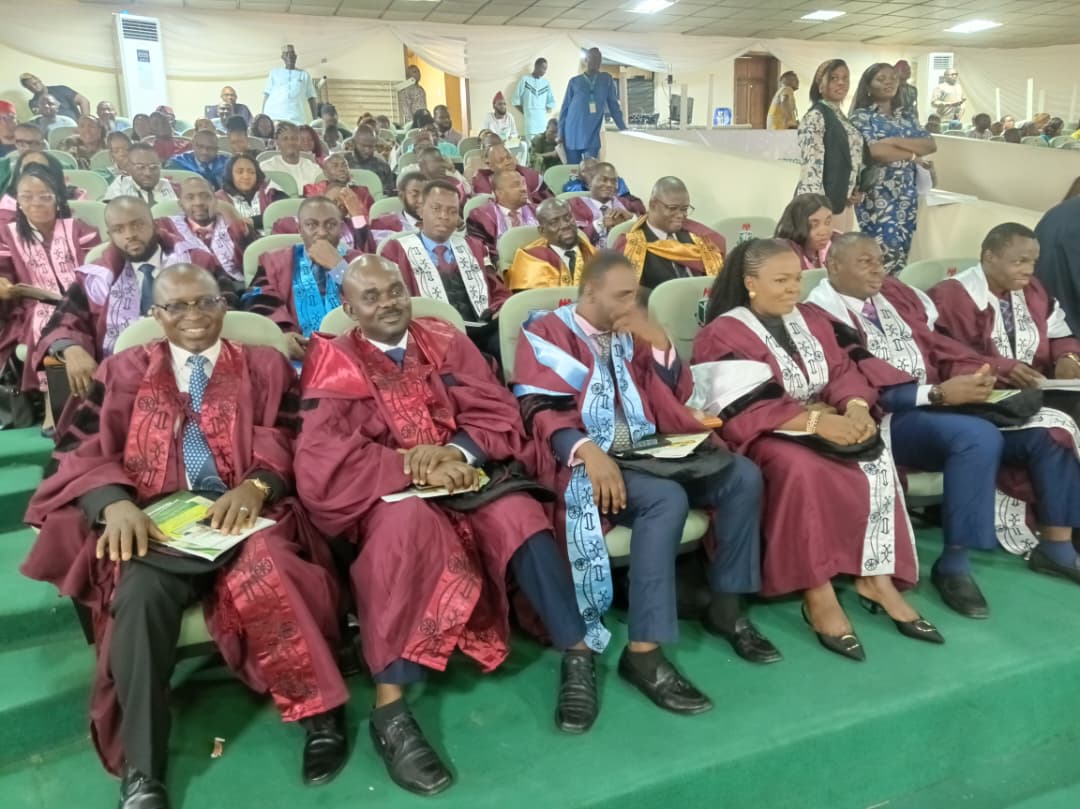
…473 doctors bag MD degrees since 2020
…NIMR seeks stronger physician-scientist pipeline
By Kingsley Samuel
The National Postgraduate Medical College of Nigeria, NPMCN, has secured approval from the National Universities Commission, NUC, to commence a Doctor of Philosophy, PhD, programme for clinicians as part of efforts to deepen medical research and specialist training in the country.
President of the College, Prof. Anthony Ikefuna, disclosed this at the 44th Annual Convocation Ceremony of the NPMCN in Lagos, saying the programme would run independently alongside the College’s existing Doctor of Medicine, MD, programme.
According to him, the new PhD programme will provide clinicians with opportunities for advanced research training in clinical and allied sciences, while strengthening the country’s capacity to produce medical specialists who can combine patient care with research.
Ikefuna said: “The College has received approval from the National Universities Commission for a PhD programme for clinicians.”
He explained that unlike the MD programme, which focuses largely on core clinical sciences, the PhD programme would cover clinical and allied sciences and operate as a pre-Fellowship degree.
The College President disclosed that about 473 candidates had been conferred with the MD degree since the programme was introduced in 2020, while more than 55 recipients were expected to receive the degree at the 2026 convocation.
The development comes amid growing concern over the shortage of doctors actively involved in biomedical research in Nigeria.
Director-General of the Nigerian Institute of Medical Research, NIMR, Prof. John Oladapo Obafunwa, who delivered the College’s 44th Annual Convocation Lecture, warned that the country needed to deliberately build a stronger pipeline of physician-scientists.
Using NIMR as a case study, Obafunwa disclosed that only seven of the institute’s 59 research fellows were medically qualified, while only five were Fellows of postgraduate medical colleges.
He said: “Fifty-nine of the 278 staff in NIMR are research fellows; out of the 59, only seven are medically qualified research fellows, and of these, only five are Fellows of the Postgraduate Medical Colleges.
“This means that physician-scientists comprise well under two per cent of the staff at the country’s premier medical research institute.”
Obafunwa said the shortage could weaken the critical link between problems encountered by doctors in hospitals and scientific investigations capable of producing better treatments and health interventions.
He consequently called on the Medical and Dental Council of Nigeria to consider introducing an integrated MBBS-PhD programme in Nigerian medical schools.
“It is perhaps time for the Medical and Dental Council of Nigeria to start looking into the introduction of the MBBS-PhD programme in the medical schools.
“This will help to encourage and start the training of physician-scientists at an early stage; such graduates can still proceed to residency training in clinical areas of their choice,” he said.
Obafunwa also urged the NPMCN to establish a formal Physician-Scientist Track that would combine specialist clinical training with translational research, biostatistics, clinical trial methods, research ethics, data privacy and regulatory compliance.
He identified heavy clinical workloads, inadequate research funding, weak career incentives, regulatory bottlenecks and brain drain among factors discouraging doctors from pursuing research careers.
According to him, Nigeria must provide protected research time, structured mentorship, dedicated grants and stronger collaboration among NIMR, universities and teaching hospitals to build a sustainable generation of clinician-researchers.