…demands medical care for injured victim, suspension of oil, gas activities
By Kingsley Samuel
Corporate Accountability and Public Participation Africa, CAPPA, has raised the alarm over another gas explosion in Bille, an island community in Degema Local Government Area of Rivers State, calling on the Federal and state governments to urgently intervene to avert further explosions and possible loss of lives.
The latest incident occurred at about 8am on Thursday, September 3, 2026, at No. 18, Opu Ibiila Community, Bille, barely two weeks after CAPPA released a documentary and report titled, Danger! Bille Is Highly Flammable, warning of worsening gas bubbling and seepage across the community.
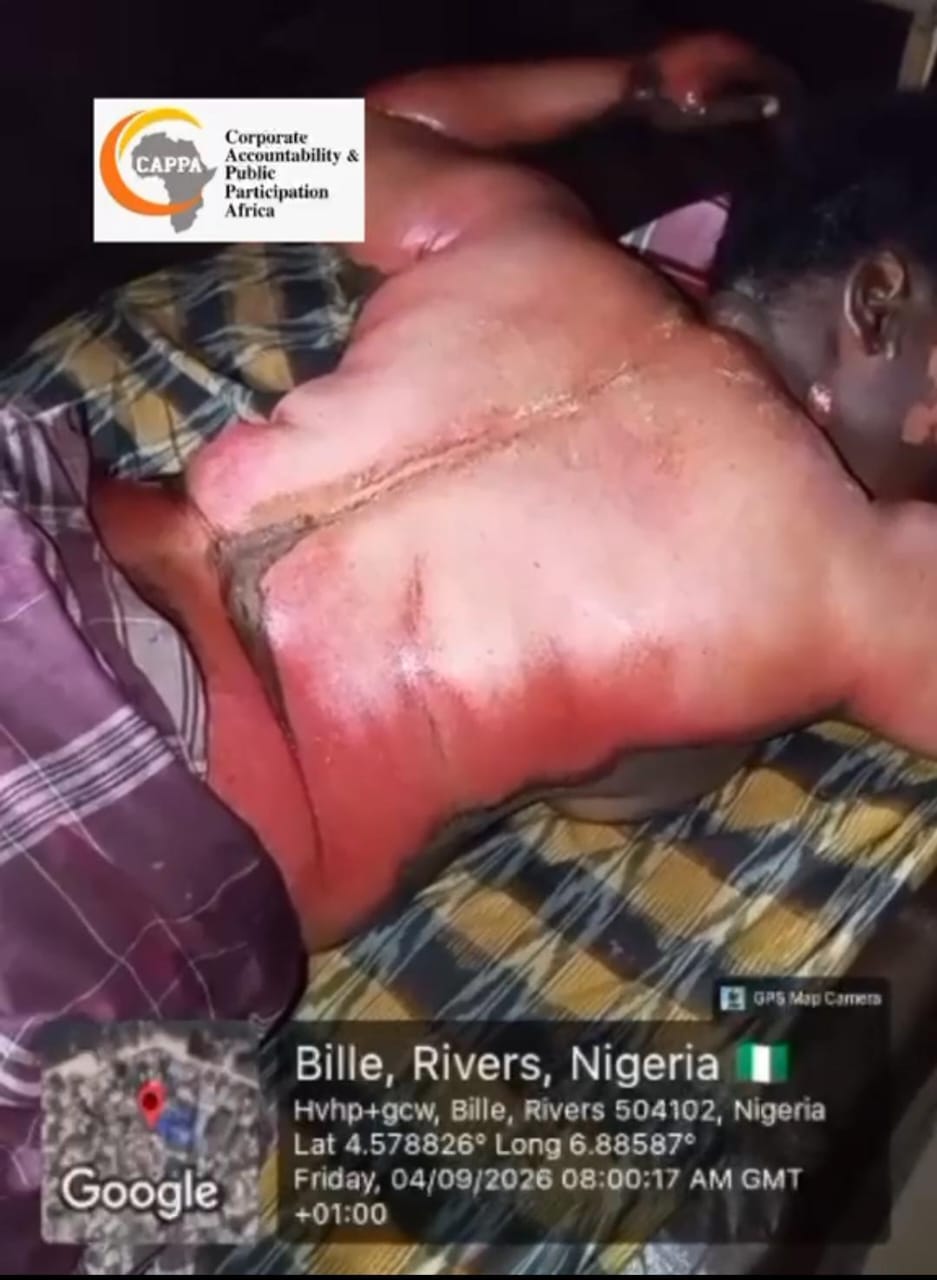
According to the organisation, the explosion set part of a residential building ablaze, shattered its windows and left the occupant, Joy Amos, with severe burns.
CAPPA said footage obtained after the incident showed Amos in serious pain, stressing that she required immediate specialist medical attention.
It called on the Rivers State Government to ensure that the victim receives urgent treatment and that her medical and rehabilitation expenses are fully covered.
Amos, an Ogoni woman, said she had repeatedly heard bubbling sounds beneath the floor of her apartment at night.
“I was in my room on the bed, using my phone, when I heard ‘poof!’ My windows shattered, and fire surrounded me. I grabbed my phone and power bank—the only things I remembered to take—and ran out of the room naked,” she said.
“I dropped them in front of my bathroom, ran outside and began to call for help.”
The Vice President of Bille Kingdom Youth Federation, Timothy Agunbiade, who arrived at the scene shortly after the incident, corroborated her account.
He said the force of the explosion appeared to have travelled from inside the room outwards, adding that Amos’s phone, power bank and gas cylinder were unaffected.
“I asked her what the cause could be. She said she had been hearing bubbling sounds in her room at night whenever she lay down and everywhere else was quiet. She had complained to one or two people but had not informed her landlady,” Agunbiade said.
“She rented the house and is not from Bille. She is an Ogoni woman, and we have not been able to reach any of her relatives. From our observation, the blast happened from inside out.”
Agunbiade added that the floor of Amos’ room had generated heat before the explosion and appeared to be under pressure from beneath.
CAPPA said the development reinforced its earlier warning that Bille was facing an escalating environmental and public health emergency.
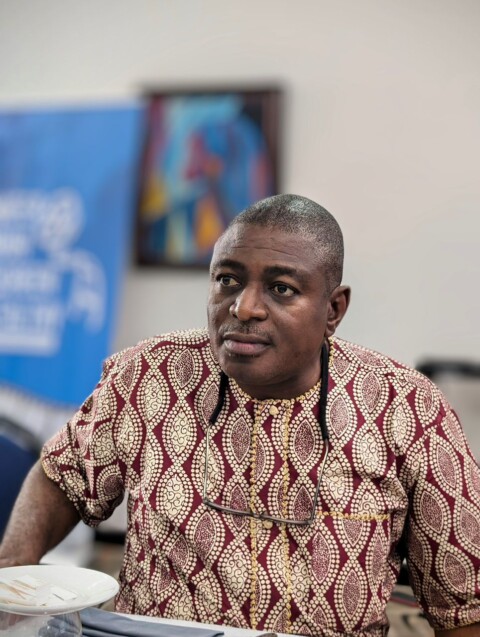
Speaking on the incident, CAPPA’s Assistant Executive Director, Zikora Ibeh, said the situation exposed the dangers faced by communities in oil-producing areas.
“Bille exposes the inhuman bargain at the heart of reckless extraction in the Niger Delta. Wealth is taken from communities and transferred to corporations and the state, while residents are left with polluted water, damaged livelihoods, illness and danger,” Ibeh said.
“No industry should be permitted to transfer the human and environmental costs of its operations onto communities. Whatever the investigation ultimately establishes as the source of these emissions, the failure to protect Bille after months of warnings is indefensible.”
The group called for the immediate suspension of oil and gas activities in and around Bille until the cause of the bubbling and seepage is established and independent experts certify that the community is safe.
It also demanded the deployment of emergency response teams, evacuation of residents to safe temporary accommodation, continuous monitoring of air and water quality and clear public guidance on the risks.
CAPPA urged the Rivers State Government, National Oil Spill Detection and Response Agency, NOSDRA; Nigerian Upstream Regulatory Commission, NUPRC; Nigerian Midstream and Downstream Petroleum Regulatory Authority, NMDPRA; Federal Ministry of Environment; Federal Ministry of Petroleum Resources and other relevant agencies to conduct a transparent and coordinated investigation into the crisis.
It said the investigation should identify the source of the emissions and assess all active, ageing, idle and abandoned oil and gas infrastructure around Bille, including wells, wellheads, pipelines and production facilities.
The organisation also demanded that unsafe infrastructure be isolated, resolved or decommissioned without delay, while all test results and findings should be made public.
It further called for the situation to be treated as a public health emergency, with multidisciplinary medical teams, emergency clinics, ambulance and hospital referral services, as well as free diagnosis, treatment and rehabilitation for affected residents.
CAPPA also demanded safe water, compensation and livelihood support for households whose fishing and other sources of income had been disrupted.
“The authorities were warned. A woman has now been severely burned, while the people of Bille remain exposed to potentially dangerous gases,” Ibeh said.
“Government must move residents out of harm’s way, provide urgent medical care, identify and stop the source of the emissions, and account publicly for its response.”
“The people of Bille have carried this burden long enough. Government cannot wait for deaths before acting,” he added.