By Kingsley Samuel
The National Information Technology Development Agency, NITDA, is looking to government’s technology spending as a potential source of demand for local cloud services, after an analysis showed that 326 ministries, departments and agencies, MDAs, spent more than N3.8 trillion on technology between June 2023 and October 2026.
NITDA Director-General, Kashifu Inuwa Abdullahi, said some of the spending could be coordinated through cloud services, helping agencies deploy digital services faster.
“Our analysis shows that, from June 2023 to date, 326 MDAs spent more than N3.8 trillion on technology,” Abdullahi said.
“Based on this analysis, we believe that a significant proportion of this investment could be centralised through cloud services. This approach could make it easier and faster for MDAs to deploy digital services.”
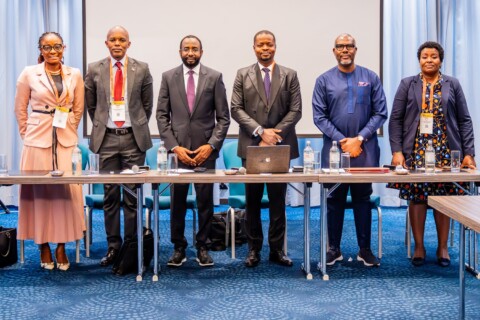
He spoke at the Executive Regulatory Dialogue on the National Sovereign Cloud Initiative, NSCI, and data localisation, organised by NITDA and the Central Bank of Nigeria, CBN, in Lagos.
Abdullahi said government could help grow the market for local cloud infrastructure by becoming a major customer for the services.
“The government is also a major potential customer for these services and can help drive the adoption of local cloud infrastructure,” he said.
NITDA did not specify how much of the N3.8 trillion in MDA technology spending could be directed to cloud services. The agency is working with the Budget Office on MDA compliance but has not announced a data-localisation deadline for government institutions.
Abdullahi said NITDA was starting its data-localisation work with the financial sector, which he described as Nigeria’s most digitised sector.
“The financial sector is the most digitised sector in Nigeria, which is why we are beginning with it,” he said.
The CBN has directed financial institutions to localise payment data by January 1, 2027. A NITDA survey of 44 institutions found that 26, or 59 per cent, had completed the required actions or expected to finish by the deadline. Fifteen said they were unlikely or very unlikely to meet it, while three could not assess their position.
Abdullahi said the NSCI was intended to strengthen Nigeria’s control over its digital infrastructure and build local capacity.
“We want to build Nigeria’s capacity for digital self-determination so that the country can maintain control over its digital future,” he said.
He said the initiative was not aimed at isolating Nigeria, but at ensuring the country participated in creating and capturing value in the digital economy.